
Late Summer & Fall Weather & Its Impact on Waterproofing in Ozark, MO
Many of you see damp basements, peeling paint, and mold after late summer moisture in Ozark. We have seen these same problems across the region, which is why we provide…

Often times, water damages begin with a hairline crack, but later on, standing water under the basement slab can lead to larger settlement issues if the water is not pumped away. In addition to water sitting under the slab, water also builds up behind a foundation wall through a process called hydrostatic pressure. Once water has built up enough pressure, the water takes the path of least resistance through the cold joint. The cold joint is where the foundation footing, foundation wall, and foundation slab meet. Since all of the concrete pours were done at separate times, this is an imperfect seem. In effect, the cold joint lets water into the basement right at the base corner.
The good news is that there are ways to solve this problem before you even have an issue. Have a leaky basement? We are here to help. We can help you with an honest assessment and work with you to find the best solution. We can handle any problem, whether a small leak or a major issue

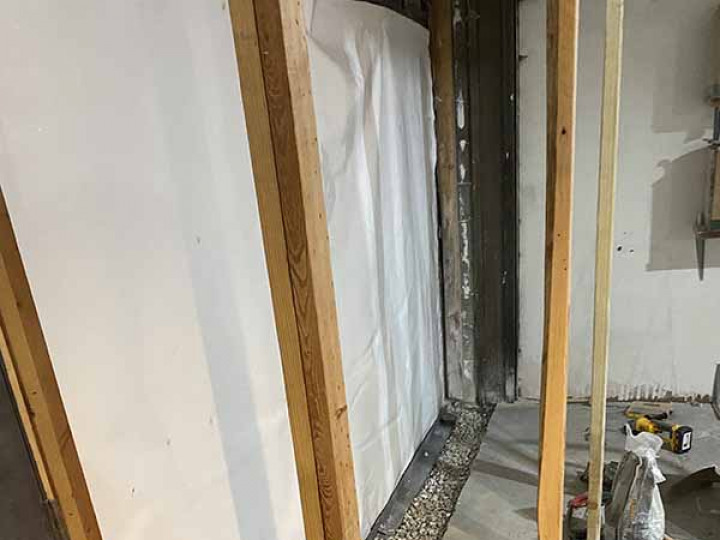
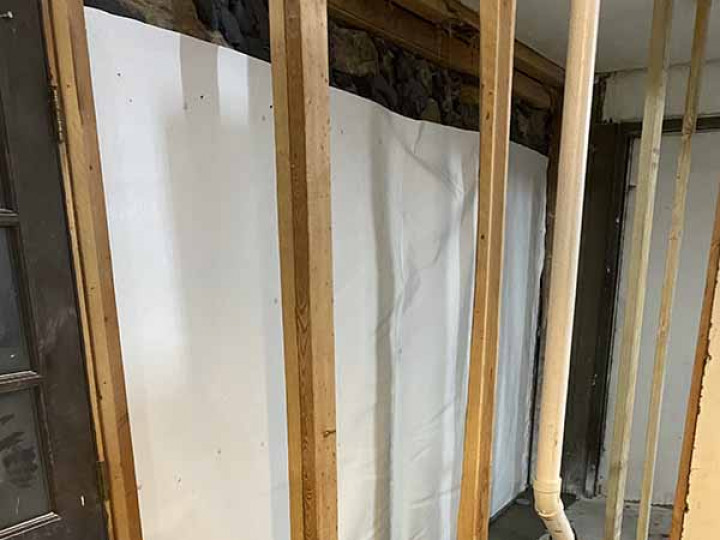

Our Advanced Basement Water Track is the most modern in the industry, when inserted in the basement slab on top of the cold joint, our system collects water right when it enters. Due to hydrostatic pressure built up in this area, the cold joint is the perfect place to collect water upon entry. We partner this water track with a nylon reinforced and riveted vapor barrier that allows us to collect surface water coming from concrete blocks and cracks on the walls. All of the water collected feeds into one system and is redirected to a sump pump basin.

Most handy men get lazy, unfortunately for the homeowner that means paying top dollar for a subpar unit or a sump pump incorrectly installed. Don’t leave sump pump systems to people who are not experts in the field. Each basin should have drainage rock, the appropriate basin size, a check valve, anti-freeze unit, and each sump pump discharge line should be buried and extended away from the foundation wall to prevent water from coming back again. Don’t play around with water, protect against it with Guardian.
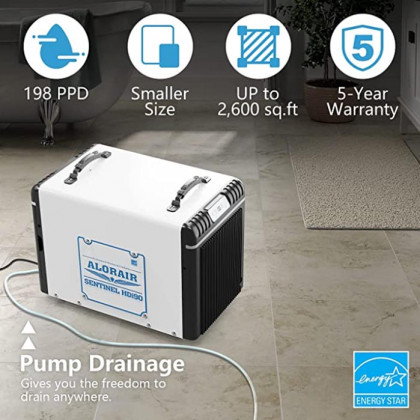
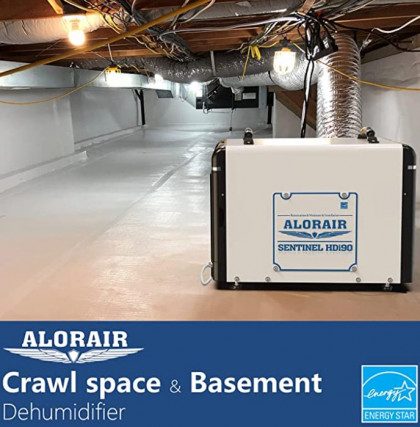
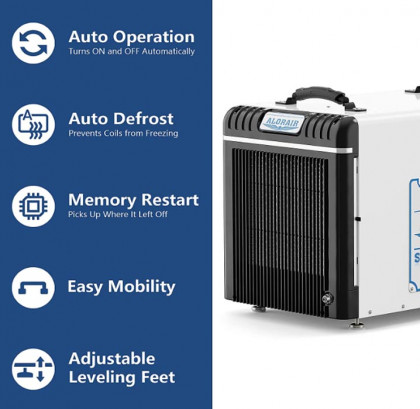
The Sentinel HDi90 Dehumidifier has cETL and ENERGY STAR approved. Energy Star Certified Dehumidifier-quickly and effectively removes moisture with less energy than conventional dehumidifiers without racking up your energy bill, saving you money.
The Sentinel HDi90 dehumidifier is designed specifically for crawl spaces and basements. Low noise level, great COP, 2.69L/kWh(115v/60Hz) and huge capacity 90 PPD at AHAM condition. The Sentinel HDi90 supplements the air conditioning system in the summer time and maintains humidity levels balanced of the year. Installation flexibility makes the unit ideal for almost any application. No conventional dehumidifier can perform as efficiently and effectively in basements and crawl spaces as Sentinel HDi90. It is the best choice for residential work and restoration jobs, and suitable for household. shops, storage areas, industrial institusions and garage applications etc… The remote control design makes this unit an ideal choice for places where remote sensing and controlling is required. Optional duct mounting flanges reduce the installation time when connecting to an existing/new ducting systems.

A sump pump can remove water collected by a basement drainage system before that water rises onto the floor, making it an important part of many waterproofing setups. Homeowners still need to address the path water takes into or around the basement, since grading, gutters, cracks, drainage, and groundwater can all affect how much water the pump must handle.
Basement waterproofing starts by identifying where water enters and then creating a reliable way to collect, redirect, or remove it. Depending on the problem, a system may use interior drainage, wall moisture management, a sump pump, exterior drainage improvements, grading, downspout extensions, or a combination of these methods.
A properly designed waterproofing system can protect a basement for many years, but pumps, drains, discharge lines, and other components still need routine inspection and maintenance. Checking the system after heavy rain and keeping drainage components in good working order can help catch problems before the next big storm puts everything to the test.
Poor grading, short or clogged downspouts, foundation cracks, saturated soil, groundwater, and pressure around basement walls or floors can all send moisture toward the home. Missouri Extension recommends checking foundations for dampness and leaks after wet weather and ensuring the ground directs water away from the house.
Schedule an evaluation when you find standing water, damp walls, water stains, musty odors, mineral deposits, recurring seepage, or leaks that appear after heavy rain. You don’t have to wait for a full basement flood because smaller moisture clues can reveal a drainage or water-management problem much earlier.
FAQs reviewed by Drake Carpenter, owner of Guardian Foundation Repair, a licensed and insured waterproofing service.


Business Name: Guardian Foundation Repair
Address: Willard, MO 65781
Phone: 417-742-8960
Business Hours:
Mon - Fri: 8:00 AM to 5:00 PM
Sat-Sun: Closed


Springfield MO • Willard MO • Ozark MO • Joplin MO • Republic MO • Nixa MO • Nevada MO • Branson MO • Camdenton MO • West Plains MO • Southwest City MO • Carthage MO • Rogersville MO • Sparta MO • Strafford MO • Marshfield MO • Stockton MO • Ava MO • Neosho MO • Anderson MO • Buffalo MO • Sedalia MO • Warsaw MO • Warrensburg MO • Clinton MO • Rolla MO • St. James MO • Waynesville MO • Cooper County MO • Cole County, MO • Boone County, MO • Calloway County, MO • Moniteau County, MO